New week, new Rust! What are you folks up to?
i am working on building a small ui framework using native render api
Update on BorrowFix from last week. It now has 20 curated borrow checker, move and lifetime errors, each with a plain English explanation, and if you paste your own broken code it gives a written walkthrough of that specific compiler error. Still rough in places. If you teach Rust or are learning it, I would like to know which error you would want explained better: https://borrowfix-smoky.vercel.app
Building a UI framework on native render APIs sounds like a big but fun project. Curious which platform APIs you are targeting first, and how you are handling the widget tree ownership so far, since parent and child references tend to fight the borrow checker pretty quickly in this kind of design.
Looks pretty cool. Any chance you could upload some screenshots to show it off? Doesn't have to be anything particularly extra, just a few basic examples.
In this repo has one screenshot GitHub - Cottons29/rust-forum: The RustForum client implementation using Rust + Aimer · GitHub
Looks clean!
Writing an article for beginners learning declarative macros for the first time, which I'll publish early next week.
Might not be very useful for this audience, but it's fun to write about something to cement the knowledge a bit better. 
But I will eventually get to proc-macro articles. Maybe those would be more interesting here.
Markview is a Markdown reader I've been building whose typesetting I have spent
a lot of time on: whole-paragraph Knuth–Plass line breaking with other typesetting
algorithms on top, for publication-quality typography. It holds up on speed too: the
first readable frame lands in ~100 ms whether the file is a 10 KiB note or a 1 MiB
book, with about 50 MB RSS. Screenshots and downloads:
https://github.com/szdytom/markview (Windows, Linux and macOS all supported, <20 MB package)
That sounds like a lot actually, support for 10fps at the very most, or are you including the time to obtain a window from the OS?
The first frame includes time to obtain a window, scan your system fonts, allocate GPU device, parse and typeset your Markdown file. The later frames are fast (~3ms)
I just created the first Tantivy index of the Pali Canon using my new language analyzer. Process time 5m 30s and 9.2MB of space used.
I have been working on a little app for ubuntu, so instead of jumping on different tools to keep my system in shape.
Here is the link to it:
Check it out and let me know.
Released first major update for the historia - event-driven framework I'm working on. Version 0.2.0 is now ready.
Update isn't really large, my core idea was to include backward-incompatible changes and prepare the ground to the next features. From the user's perspective, unless they've implemented custom broker implementations, update probably will not even require any additional moves.
Most valuable feature added in this update is auto retries for non-critical errors on subscribing and processing messages. Critical errors will trigger graceful shutdown for the program.
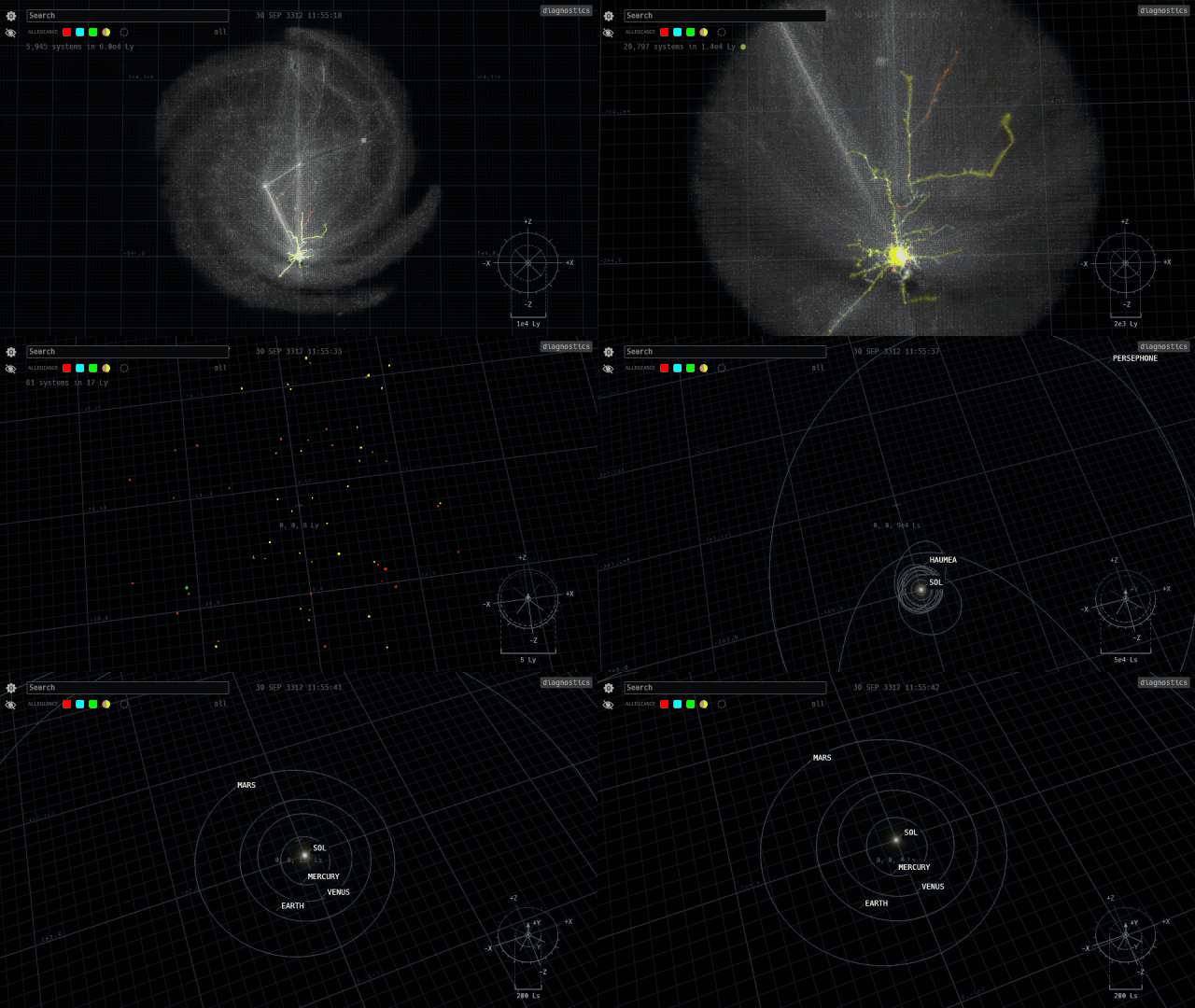
I am working on building cargo-slide and found a WYSIWYG mode really hard to build...
And working on some architecture design issue of some HPC project also.

I believe the operation you're doing with that if-else-if block is called HashMap::get.
Yeah, You are right. I use HashMap<&str, Vec<&str>>to refactored this shit-mountain at night, thank you(My programming skill isn't well, because I'm a middle school student)